Lake Okareka, close to Rotorua
The threatened rain didn't happen last night and we would probably have been more comfortable sleeping in our car, but never mind, we had a quick pack-up this morning and got to Rotorua in time to do everything we wanted and go on to the DoC site by mid afternoon. Everything in Rotorua is expensive, an entry free is required for almost everything and it is in the region of $30-40 a person. We decided to pick one item and went to the Whakarewarewa Thermal Reserve in order to see Te Puia, and especially the 15 m high geyser called Pohutu. It was impressive, as were the boiling mud pools. However steam and hot water bubbling up through the pavement in Ohinemutu probably had a bigger impact for me. We actually went to see St Faith's Anglican Church with all it's beautiful carving and woodwork. Ohinemutu is still occupied as a Maori village and the people living there use the naturally occurring hot water and steam for all their cooking and domestic needs.
Now we are on a DoC site at Lake Okareka, which is surprisingly crowded. There was no-one here when we arrived, but as usual there was a steady stream of arrivals during the course of the afternoon and evening. Even here there is an occasional whiff of Sulphur, but even on Rotorua itself it is not as strong as I expected.
Tomorrow we are off to Coromandel, aware that we still have a lot to see in NZ and the time is rushing by.
Monday, March 4, 2013
Monday 04 March

Saturday, March 2, 2013




Sunday 03 March
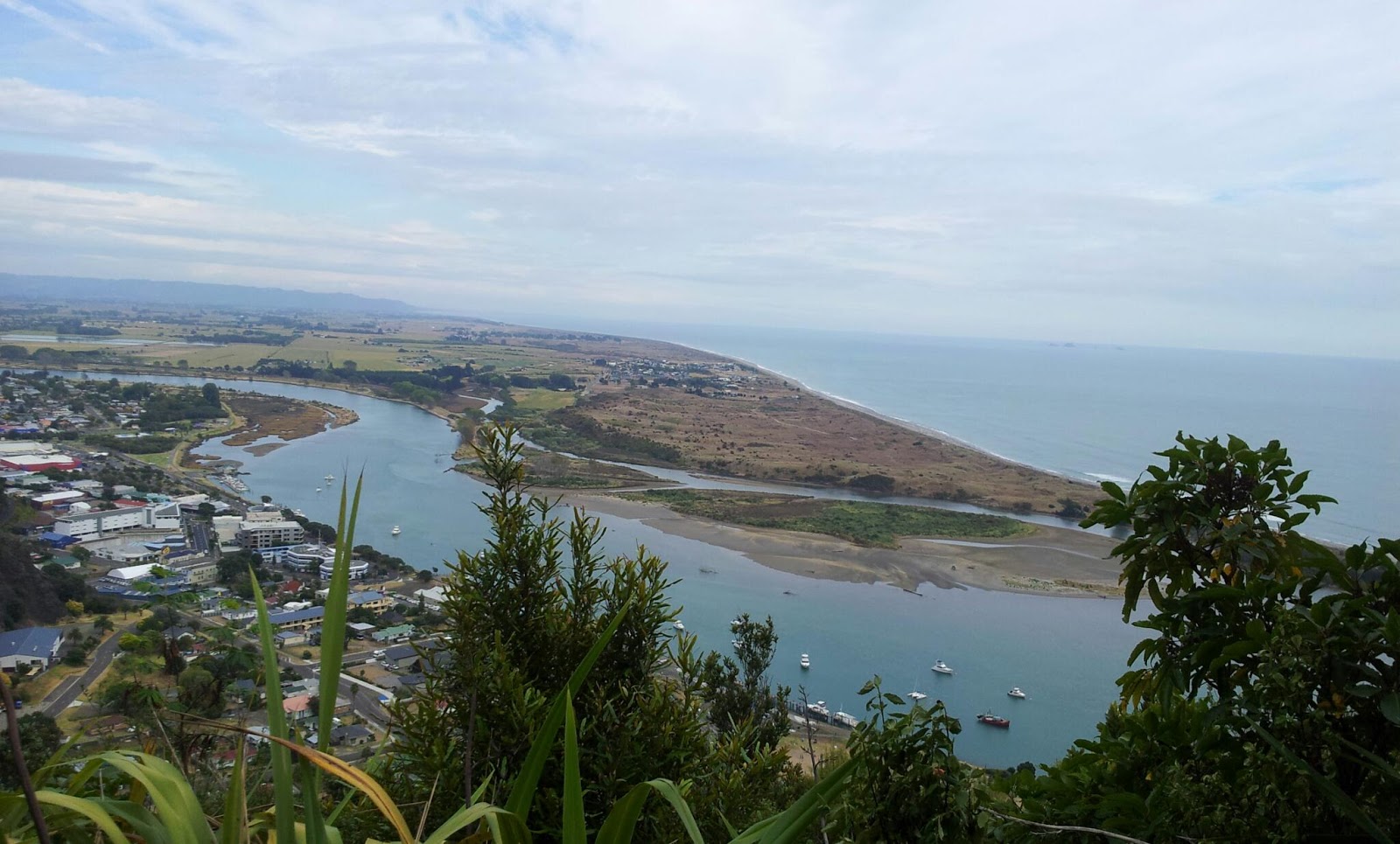
Whakatane, Bay of Plenty
This is our second night in Whakatane. We finished our trip around the East Cape yesterday morning. The west coast was quite different to the eastern side, much more rugged. We headed for this site at Whakatane, and we made a really good choice. First the campsite is good, some of the facilities are a bit aged, but it is very clean and tidy and not at all crowded. We looked at one the other side of the estuary first, at Ohope and were overwhelmed by it's size, the number of people there and all the wonderful facilties. There was a swimming poolwith a water chute, not us at all so we have come to this more modest site amd are very comfortable here.
Yesterday afternoon we walked along the river bank into the part of the town bordering the river estuary. It is a lovely place, it feels so perfect it could be a film set. There is absolutely no litter, although that is the case for practically everywhere we have been in New Zealand. On a Saturday afternoon everyone was going about the place very slowly and casually. Families had spread picnics out by the river, and in one of the many grassy areas. Children ran to put their rubbish in the bins, youngsters played together, jumping into the river or riding their bicycles, or playing touch rugby.
Rugby rules! Groups of lads, mixed Maori and white hang out on any piece of grass and play with a rugby ball. On campsites couples spend time throwing a rugby ball back and forth. A man playing with his dog was tossing a rugby ball for it.
Today we did one of the walking routes recommended for the area, or rather part of it. We climbed up and down, between sea level and about 200 metres for what seemed like many times. Most of the time we were in the thick forest which we have used to seeing here. We understand that there are actually wild Kiwis (birds, not people) still living in this area. They are endangered and you are very lucky to see one in the wild, most are in captivity in conservation area. Although we heard several rustlings in the undergrowth we didn't see one. Everywhere here is very dry, they haven't had rain for a long time, at least three weeks, and even a dead leaf fluttering to the ground makes a noise. The walk took us four hours and as the crow flies we only covered about 8 kms, but I am convinced we can double that to take onto consideration all the ups and downs. The walk we had planned should have been a circular route, but half way we needed to cross a bay at low tide. When we reached it I was concerned about the rising tide and the fact that we would need to scramble over rocks already partially covered, and not knowing anything about the local conditions decided it was a risk I didn't want to take. So we had to retrace our footsteps instead. The consolation was that the walk back gave better views than the walk out. We will both have tired legs tomorrow, but after a long, hot shower and a couple of beers I am making a good recovery.
Tomorrow we are headed for Rotorua and more hot springs, geysers etc. We will probably stay on DoC sites for the next few nights so no more WiFi for a time.


Friday, March 1, 2013
Friday 01 March
Te Kaha, western side of the East Cape
Last night it rained. It drizzled for most of the evening and we sat in the camp kitchen to play cards. We were the only people there. Then in the night, early, around 01, I woke to the sound of rain hammering down. It went on and on, I had to put my waterproof on in order to go to the toilet. Miraculously we didn't get wet inside the van at all, any dampness I took back in after a couple of trips to the toilet. It's the first time we have had to deal with heavy rain when we have had the bed made up. Fortunately I am still quite agile and was able to crawl around in the back of the car and dismantle the bed and stack everything up. John took the tent canopy down and rolled it up into it's bag. The two plastic sheets I brought with me, essential camping items in any country/climate, were invaluable. I rolled all the bedding up in them so that it stayed reasonably dry. We drove through heavy rain to Gisborne to do some shopping and then on up the east coast. It rained quite hard until we were well up the coast, and then it was intermittent drizzle. We had no real plans about where to stop for the night, but decided to head for the campsite at The Araroa, right at the head of the peninsular. It sounded like a lovely spot. However it had been taken over completely by the workmen on the gangs of labourers installing fibre optic cables throughout the area, as a temporary base. We had passed several groups of them as we had driven up. The facilities at the site were horrible, grimy and smelly. So we decided to journey on, down the west side of the peninsular. By this time the rain had completely disappeared and given way to blue skies and some fluffy clouds. We looked in on a couple of other campsites and they were also not very clean or well maintained. We had given up and were headed for a motel when we came across a Campsite at Te Kaha, not mentioned in our RG. It is excellent, very large but at the moment sparsely populated. The facilities are fine for the number of people here at the moment, but they would get a bit busy if the site were full.
It is so much warmer, I am sitting outside in just a T-shirt and shorts at 19.45, other nights I would have been in fleecy bottoms and warm sweater by now. However some black clouds have been rolling in. Maybe more rain tonight! The East Cape is a very rural area, the majority of the population are Maori. The scenery in pretty rolling countryside and some mountains, it is mostly green pastureland, but there is some commercial logging. The roads were better than we had expected, they are narrow in places and very winding, but in good condition. The coastline is the stunning thing here, with bays and promontories, surf rolls in over rocks, white giving way to blue and turquoise; and that's on a dull day. When the weather is really good it must be so beautiful.


Thursday 28 February
Morere, Hawke Bay
We seem to be the only people staying on a campsite behind a cafe, just north of Nuhaka, at the northern edge of Hawke Bay.
We left Taupo this morning and took a route through some varied scenery to Napier. As well as some high mountain passes, up to 800 metres, we also went through an area of desert. It isn't true desert as the rainfall is too high but as the soil covering is mainly pumice there is no water retention and few plants can survive.
I liked Napier, it had an air of quiet gentility. The centre with it's beautifully maintained art-deco buildings, built in the 1930s after the area was devastated in an earthquake, echoed a past long gone. Groups of people sat outside the cafes surrounded by shops selling old and reproduction goods from the. It was all tastefully done.
We then continued round Hawke Bay, not sure where to stop for the night. We looked at quite a nice DoC site by a lake, but the sky was overcast and there were occasional smatterings of rain so we pressed on until we came to Morere. It's all a bit Marie Celeste, the cafe has closed and there is no-one about. There is a house next to the campsite with a couple of cars outside so mabe the owners live there, but there is no sign of anyone. It should be a quiet night.
We saw so much logging today. At first impact it seems that most of New Zealand's mountain sides are forested. They are, but by row upon row of conifer plantations. Is the conifer an indigenous tree? Was native scrub cleared to develop this industry ? If so, how has that affected the native plants and animals. Logging takes place on such a vast scale, what happens to all the wood? Who profits from it's sale? How is it managed?